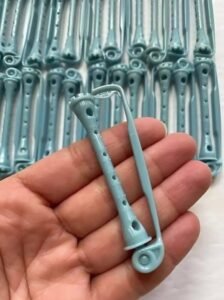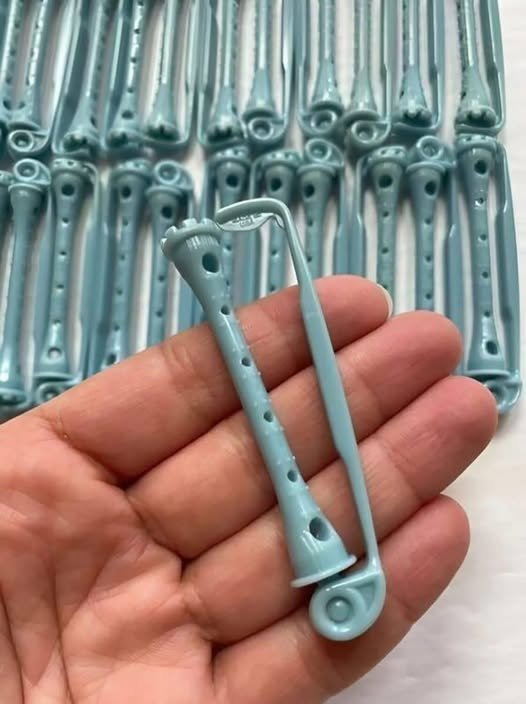
At first glance, these little blue-green tools may look like tiny hooks or unusual sewing accessories, but they are a fascinating example of the specialized tools once used by crafters to create intricate handmade work.
Their unusual shape, long narrow body, and multiple openings are designed to help guide, hold, or manipulate yarn during traditional textile crafts. Tools like these are a reminder that crochet and needlework have developed a huge variety of techniques over the years, many of which required specialized equipment that isn’t commonly seen today.
A Closer Look at These Vintage-Style Tools
The pieces shown in the image have a distinctive elongated shape with several holes along the shaft and a hinged or attached section. Their unusual construction suggests that they were designed for a specific textile technique rather than ordinary hand sewing.
Older crochet and needlework tools were often made from materials such as bone, wood, metal, celluloid, and early plastics. Manufacturers produced them in many shapes and colors, and some were designed to make particular stitches or decorative techniques easier.
Why Specialized Crochet Tools Were Used
Traditional crochet is usually associated with a single crochet hook, but many techniques use additional tools.
Specialized tools can help with:
- Creating loops of consistent size
- Holding multiple strands of yarn
- Producing decorative edges
- Making lace and openwork
- Forming unusual stitch patterns
- Keeping yarn organized while working
For experienced crafters, these tools could make complicated techniques considerably easier and more consistent.
The Charm of Vintage Needlework Tools
One reason vintage craft tools remain so interesting is their connection to handmade traditions.
Before modern crafting became widely accessible through online tutorials and mass-produced accessories, many techniques were passed from one generation to another. A particular tool might have been part of someone’s sewing basket for decades.
Even a small object can therefore tell a story about the way people created clothing, household decorations, lace, and gifts by hand.
Collecting Old Crochet and Sewing Tools
Vintage textile tools have also become interesting collectibles. Collectors often look for unusual shapes, distinctive materials, manufacturer markings, original packaging, and tools associated with specific techniques.
When examining an old tool, it’s worth looking carefully for:
- Manufacturer names or marks
- Numbers or patent information
- Original packaging
- Material and construction
- Signs of wear
- Matching pieces from the same set
The condition of the tool can also provide clues about how frequently it was used.
A Reminder of Handmade Craftsmanship
Today, a huge variety of crochet and sewing supplies are readily available, but unusual vintage tools like these show just how inventive earlier generations of crafters were.
Whether you are a crochet enthusiast, a vintage-tool collector, or simply someone fascinated by forgotten household objects, discovering an unfamiliar needlework tool can be the beginning of an interesting piece of craft history.
Sometimes the smallest objects have the most intriguing stories behind them.