Constipation can leave you feeling uncomfortable, bloated, and sluggish. When bowel movements become infrequent or stools are hard and difficult to pass, simple daily habits can often make a meaningful difference.
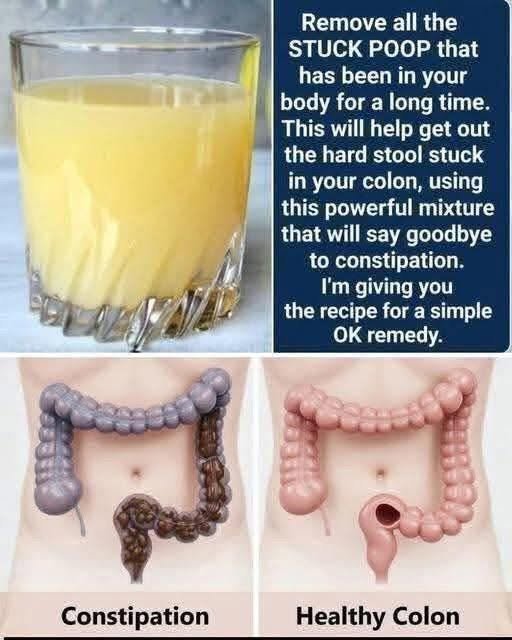
The image circulating online suggests that a powerful drink can “remove all the stuck poop” from the colon. That wording is misleading: the colon does not normally need to be “detoxed” or cleaned out with a special drink. However, adequate fluids, fiber-rich foods, physical activity, and healthy bathroom habits can help relieve and prevent constipation. (NIDDK)
What Is Constipation?
Constipation can mean having fewer than three bowel movements per week, passing hard or lumpy stools, having difficulty or pain when passing stool, or feeling as though you have not completely emptied your bowel. (NIDDK)
Everyone has a different normal bowel pattern, so going every day is not necessarily required. What matters is a noticeable change from your usual pattern and whether stools are becoming difficult to pass.
Why Does Constipation Happen?
Several everyday factors can contribute to constipation, including:
- Not eating enough fiber
- Not drinking enough fluids
- Being physically inactive
- Ignoring the urge to use the bathroom
- Changes in diet or routine
- Certain medications or supplements
- Some underlying medical conditions
Increasing fiber gradually and drinking enough fluids can help make stool softer and easier to pass. (NIDDK)
A Simple Morning Drink to Try
If you enjoy having something warm in the morning, you can make a simple prune-and-water drink.
Ingredients
- ½ cup prune juice
- ½ cup warm water
- A squeeze of fresh lemon, optional
Directions
- Combine the prune juice and warm water.
- Add a little fresh lemon if desired.
- Drink slowly rather than consuming it quickly.
- Continue drinking water throughout the day.
Prunes and prune juice are commonly used to help with constipation. Prunes provide fiber and naturally occurring compounds that can help draw fluid into the colon. (Mayo Clinic)
Important: This drink is not a colon cleanse and should not be presented as removing years of “stuck waste.” Its role is simply to be one possible part of a constipation-friendly routine.
Fiber Is One of the Most Important Pieces
Adults generally need around 22–34 grams of fiber per day, depending on age and sex. If your current diet is low in fiber, increase it gradually because suddenly eating large amounts can cause gas and bloating. (NIDDK)
Good choices include:
Fruits
- Pears
- Apples with the skin
- Berries
- Oranges
- Prunes
- Peaches
- Apricots
Vegetables
- Broccoli
- Carrots
- Green peas
- Leafy vegetables
Whole grains
- Oatmeal
- Whole-wheat bread
- Whole-grain pasta
- Bran cereals
Legumes
- Lentils
- Chickpeas
- Black beans
- Kidney beans
Nuts
- Almonds
- Peanuts
- Pecans
These foods can provide the fiber needed to add bulk and improve stool consistency. (NIDDK)
Don’t Forget Water
Fiber works best when you consume enough fluids. Increasing fiber without adequate hydration can sometimes make you feel more bloated or uncomfortable.
Drink water regularly throughout the day, with the amount appropriate for your individual needs, activity level, climate, and health circumstances. (NIDDK)
Movement Can Help Too
Regular physical activity can help stimulate bowel movement and support normal digestive function. Even something as simple as taking a walk each day can be a useful addition to a constipation-friendly routine. (NIDDK)
You don’t necessarily need an intense workout. Consistency is more important than intensity.
Don’t Ignore the Urge
One surprisingly useful habit is simply responding when your body tells you that it is time to go.
Holding stool repeatedly can make bowel habits more difficult. Some people also find it helpful to establish a regular bathroom routine, such as trying to use the bathroom 15–45 minutes after breakfast, when eating can naturally stimulate colon movement. (NIDDK)
A small footstool can also make the bathroom position more comfortable for some people.
What About Laxatives?
For occasional constipation, healthcare professionals may recommend different types of over-the-counter treatments, including fiber supplements, osmotic agents, stool softeners, lubricants, or stimulant laxatives. The appropriate option depends on the individual situation. (NIDDK)
Stimulant laxatives should not simply be used routinely without appropriate guidance, particularly when constipation is persistent or severe.
If you regularly need laxatives to have a bowel movement, speak with a healthcare professional rather than repeatedly increasing their use.
When Constipation Needs Medical Attention
Constipation is often manageable with lifestyle changes, but it should not always be treated at home.
Seek medical attention if constipation is accompanied by:
- Blood in the stool or rectal bleeding
- Persistent or severe abdominal pain
- Vomiting
- Fever
- Inability to pass gas
- Unexplained weight loss
- Persistent symptoms that do not improve with self-care
These symptoms can sometimes indicate a more serious problem and should be evaluated by a healthcare professional. (Deja Vu)
The Bottom Line
There is no need to believe claims about years of “stuck poop” being removed by a miracle drink. A healthy colon does not require a homemade detox or cleanse.
A better approach is much simpler:
Eat enough fiber → drink enough fluids → stay active → don’t ignore the urge → establish healthy bathroom habits.
For many people, these everyday changes can help make bowel movements softer, easier, and more regular. (NIDDK)
Disclaimer: This article is for general educational purposes and is not a substitute for medical advice. If constipation is persistent, severe, or accompanied by concerning symptoms, consult a healthcare professional.